
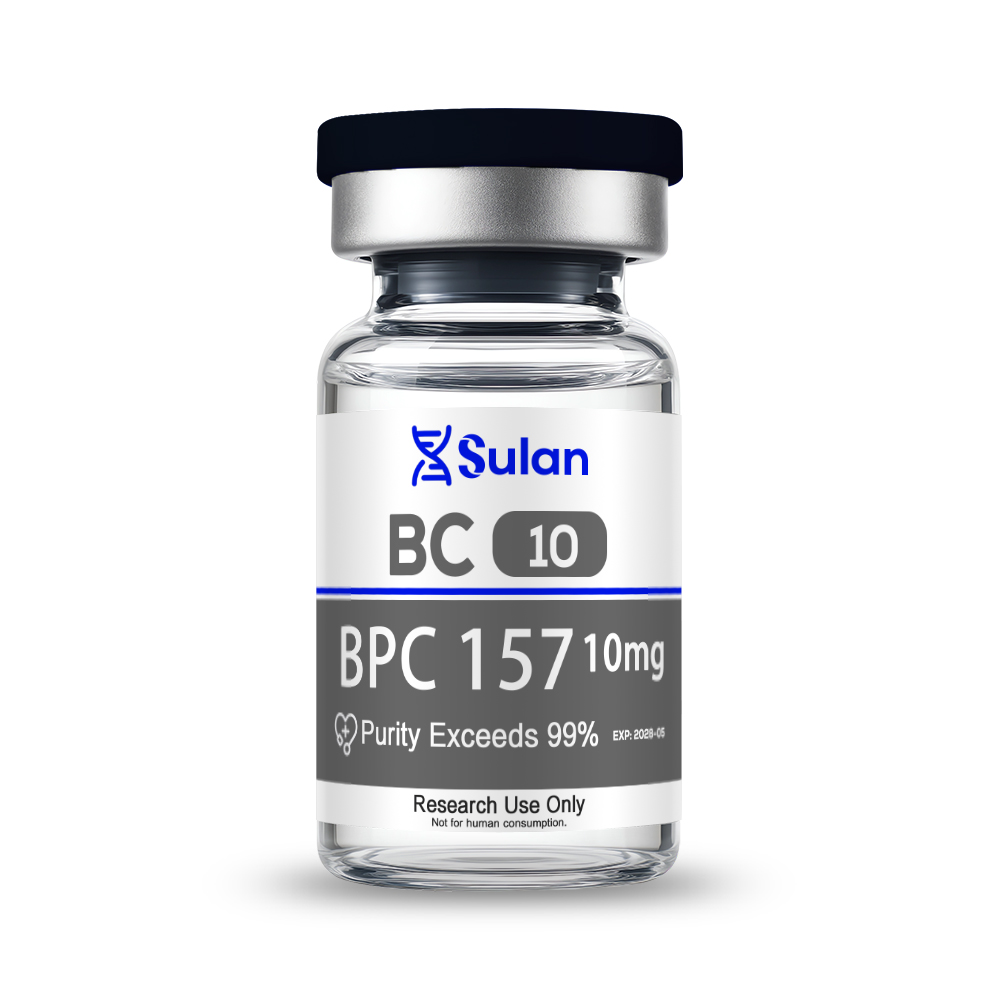
BPC-157
This price is for one box, with ten pieces per box
- only 46 left in stock
- 10 people are viewing this right now
- 301 people has purchased this in 7 days
 Returns & Exchanges within 30 daysAny return for unsatisfied item(s) is available within 30 days
 Money Back GuaranteeA full refund within one week upon receiving your return
 3-Month WarrantyCovering any possible defect in materials and workmanship
 Safety AssuranceOur products are strictly tested and quality assured


BPC-157 Peptide
The BPC-157 peptide, also known as Pentadecapeptide BPC 157 or Body Protection Compound 157, is a synthetic compound that has been suggested in various studies to assist with healing joint, tendon, and muscle tissue, as well as nerve tissue.
BPC-157 is a peptide composed of 15 amino acids with potential protective properties. As the name suggests, Body Protection Compound (BPC) is an amino acid fragment isolated from gastric juice. (1) BPC-157 is also commonly known as pentadecapeptide due to the 15 amino acids it is comprised of. (1)
Overview
BPC-157 has been steadily researched for its potential in wound healing. Presentation of BPC-157 may stimulate the growth hormone (GH) receptors, thereby inducing similar GH potential. BPC-157 peptide appears to bind with growth hormone receptors, possibly stimulating cell proliferation. This may lead to the development of new tissue composed of collagen and the development of a network of blood vessels in a process also called ‘angiogenesis.’ Consequently, the wound is ‘rebuilt’ and healed faster than the usual rate. (1)
BPC-157 has also been studied in correlation to gastrointestinal function. Serotonin, an enteric neurotransmitter, is localized in the GI tract and GI mucosa. Altered serotonin levels may inhibit gastric acid secretion, affecting gut mucosal function and influencing gastric blood flow. (2) BPC-157 appears to have a particular antidepressant activity, which may counteract serotonin-induced action. The peptide may counteract the 5-HT2A receptors, restricting the serotonin binding with these receptors and thereby inhibiting its action. (3) The peptide has been researched for its potential action across diverse functions, including tissue repair, pain perception, gastrointestinal regulation, and tendon, ligament, muscle, and bone cell reparations.
Multiple studies have since been conducted to understand the full action of the peptide, especially in th