
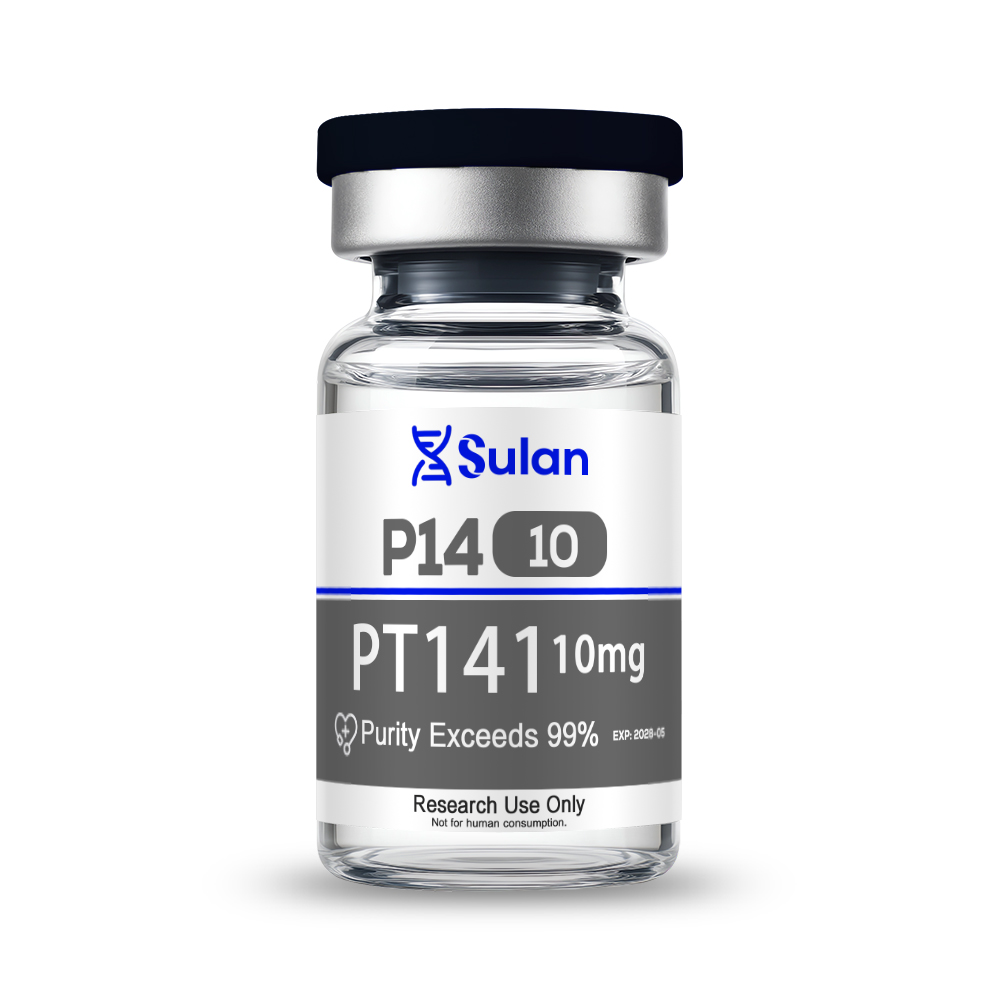
PT-141 (Bremelanotide) (10mg)
This price is for one box, with ten pieces per box
- only 26 left in stock
- 28 people are viewing this right now
- 414 people has purchased this in 7 days
 Returns & Exchanges within 30 daysAny return for unsatisfied item(s) is available within 30 days
 Money Back GuaranteeA full refund within one week upon receiving your return
 3-Month WarrantyCovering any possible defect in materials and workmanship
 Safety AssuranceOur products are strictly tested and quality assured


PT-141 Peptide
Bremelanotide, which is also commonly known by PT-141, is a cyclic synthetic peptide composed of seven amino acids. (1) PT-141 synthetic peptide appears to be agonistic to melanocortin receptors, which is similar to the natural hormone alpha-MSH. (2) It is a by-product of the metabolism of another synthetic analog called melanotan II. Initial studies suggested that melanocortin hormones may regulate various physiological functions. When test animals were presented with the isolated hormone, it was reported to present elevated reproductive functions, which is one of the primary areas of research currently being conducted on PT-141 peptide.
Overview
Studies have suggested that PT-141 shows agonistic properties towards melanocortin receptors, namely MC3R and MC4R, which may result in elevated reactions in the central nervous system. MC3R, which appears to be primarily expressed in the brain, especially within the hypothalamus, might play a role in energy homeostasis. It has been hypothesized by research teams examining melanocortin receptor activity, that MC3R may potentially modulate the actions of other melanocortin receptors in this area. Moreover, MC3R might influence feeding behavior, possibly impacting appetite and food intake, and is thought to be involved in various metabolic processes, including the potential regulation of glucose and lipid metabolism. (3) On the other hand, MC4R is believed to be essential in appetite control. When activated in the brain, it is considered to contribute to appetite regulation. MC4R is also posited to have a role in energy expenditure, with its activation possibly leading to an increase in energy output, which could contribute to weight reduction. This receptor has also been tentatively linked to reproductive function, especially in the potential regulation of the function of penile tissues and overall reproductive behavior. (4) In publically available study, it was suggested by researchers that fo